

If you have ever priced up a wardrobe online and come away more confused than when you started, you are not alone. Custom built in wardrobes cost can vary quite a bit, because no two rooms, storage needs or finishes are exactly the same. A simple sliding robe for a spare bedroom sits in a very different price bracket to a full wall of cabinetry with drawers, shelving and premium doors.
That is why the real question is not just, “How much does a built-in wardrobe cost?” It is, “What are you actually getting for the price?” When you look at wardrobes properly measured, designed for the room, manufactured to suit and professionally installed, the cost starts to make a lot more sense.
What do custom built in wardrobes cost in Sydney?
As a general guide, custom built in wardrobes cost anywhere from around $1,400 for a more straightforward design through to $6,000 or more for larger, more detailed installations. If you are fitting out a master bedroom with a wide wardrobe, multiple internal zones and upgraded finishes, the figure can move higher again.
That is a broad range, but it reflects how much the final price depends on the design. Width, height, door type, internal layout, material choices and installation complexity all play a part. A wardrobe that needs to work around bulkheads, uneven walls or tight corners will usually cost more than one going into a clean, square opening.
For most homeowners, a realistic starting point is to think in terms of project level rather than a single flat rate. Entry-level custom wardrobes cover the basics well. Mid-range wardrobes usually bring a better mix of function and finish. Premium wardrobes focus on a more refined look, upgraded internals and stronger visual impact in the room.
Why custom built in wardrobes cost more than flat-pack options
At first glance, flat-pack furniture can look cheaper. In many cases, it is. But it is also built to standard sizes, standard finishes and standard layouts. If your room is an awkward shape, has low ceilings, cornices, power points in the wrong spot or simply needs smarter storage, standard sizes can leave wasted space and a poor fit.
A custom built-in wardrobe is made for your room and your routine. That includes site measure, design advice, materials cut to suit, internal configuration, manufacturing and installation. You are paying for the wardrobe itself, but also for the planning that makes it work properly once it is in place.
That difference matters over time. A wardrobe that fits wall to wall and floor to ceiling generally gives you more usable storage, looks cleaner, and feels like part of the home rather than an afterthought. For many households, that long-term practicality is where the value sits.
The main factors that affect cost
Size and overall layout
The larger the wardrobe, the more material and labour it needs. A two-door built-in for a child’s room will cost far less than a four-door robe spanning an entire bedroom wall. Height also matters. Full-height cabinetry often looks more finished and makes use of overhead storage, but it can increase both material use and installation time.
Layout changes cost too. A straightforward run is usually more affordable than an L-shaped wardrobe or a design built around architectural features.
Door style
Doors have a noticeable effect on price. Sliding doors are a popular choice where space is tight, because they do not swing out into the room. Hinged doors can provide full access to the interior and suit many traditional layouts, but the hardware and door count can influence pricing.
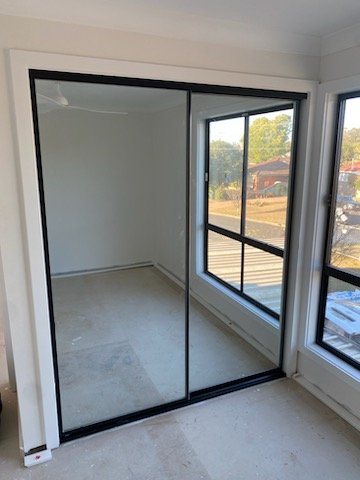
Shaker-style profiles, coloured finishes and framed designs can all shift the cost upwards compared with a plain white panel / mirror doors. None of these are wrong choices. It simply comes down to what matters most – budget, appearance, access or a mix of all three.
Internal fit-out
This is often where price moves the most. Basic internals might include hanging rails and top shelves. Once you add drawer units, open shelving, double hanging, shoe storage, jewellery drawers, pull-out accessories or custom compartments, the cost increases accordingly.
The key is to avoid paying for internals that look impressive on paper but do not suit how you actually use the space. A well-planned wardrobe is not about cramming in every feature. It is about giving each item in the room a proper place.
Materials and finishes
Most custom wardrobes are built using durable board products with a decorative finish, but there is still a wide range in quality and appearance. Standard finishes tend to be the most budget-friendly. Woodgrain textures, designer colours, glass-look surfaces and more premium board selections usually come at a higher price.
Hardware quality also matters. Better runners, hinges and sliding systems tend to perform more smoothly and last longer, but they can add to the upfront spend.
Installation conditions
A simple installation is naturally more affordable than one that needs extra site work. If walls are out of square, skirting needs to be addressed, flooring is uneven, or access is difficult, labour can increase. Apartments, upper-storey homes and properties with limited access can all affect installation planning.
This is one reason quotes can differ between homes even when the wardrobe size appears similar.
Typical price brackets to expect
A basic custom built-in wardrobe usually sits at the lower end of the range. This might suit a secondary bedroom or investment property where the aim is neat, practical storage with a clean finish.
A mid-range wardrobe often includes more tailored internals, better door selections and a more polished look overall. This is where many family homes land, because it balances everyday function with a finish that adds to the room.
At the premium end, wardrobes tend to include larger spans, upgraded internal cabinetry, more refined details and higher-end materials. These projects are common in master bedrooms, walk-in robes or homes where cabinetry is expected to match a broader renovation standard.
If you are comparing quotes, make sure you are comparing the same scope. One price may include installation, internal drawers and upgraded doors, while another may be based on a much simpler layout.
How to budget without overspending
The smartest way to manage wardrobe costs is to set priorities early. Think first about what the wardrobe needs to do, not just how you want it to look. Do you need more hanging space for work clothes, shelves for folded linen, drawers for smaller items, or overhead storage for seasonal use? Those practical decisions shape the design and help keep the budget focused.
It also helps to separate must-haves from nice-to-haves. Soft-close hardware, extra drawers or decorative door finishes may be worth it in some rooms and unnecessary in others. If the budget is tight, a simpler external finish paired with a strong internal layout is often the better investment than the other way around.
Professional advice can save money here. An experienced wardrobe specialist can usually spot ways to simplify a design without compromising function. Sometimes shifting drawer placement, adjusting door configuration or refining the internal split is enough to bring a quote back into a comfortable range.
Are custom wardrobes worth the cost?
For many homeowners, yes – especially when storage is limited or the room has awkward dimensions. A custom wardrobe is one of those additions that gets used every day, which makes the design quality more important than it might seem at first.
There is also a difference between cheap and cost-effective. A lower-priced option that wastes space, wears poorly or needs replacing sooner is not always the better value. A well-made built-in wardrobe should feel solid, suit the room properly and keep working for years.
That is where experience matters. Companies that design, manufacture and install their own cabinetry are generally better placed to manage quality, fit and finish from start to finish. For homeowners, that usually means fewer surprises and a clearer understanding of what is included.
Questions worth asking before you accept a quote
Before going ahead, ask what is included in the price and what is not. Clarify whether the quote covers site measure, design, manufacturing, installation, internal fittings and removal of any existing wardrobe. It is also worth asking about materials, hardware quality and warranty coverage.
A good quote should feel clear, not vague. If one price seems far lower than the rest, there is often a reason. It may be a simpler scope, lower-spec materials or exclusions that only become obvious later.
For a made-to-measure project in your home, confidence counts. That is one reason many homeowners prefer working with established local specialists such as T&T Wardrobes, where practical design advice and long-term workmanship are part of the service, not an extra.
A custom wardrobe should make the room easier to live with every single day. If the design fits your space, your habits and your budget, the cost is not just about cabinetry – it is about getting lasting value from a solution built properly the first time.
Contact us for a quote, if you would like a quote for a wardrobe which is custom designed for your space and requirements.